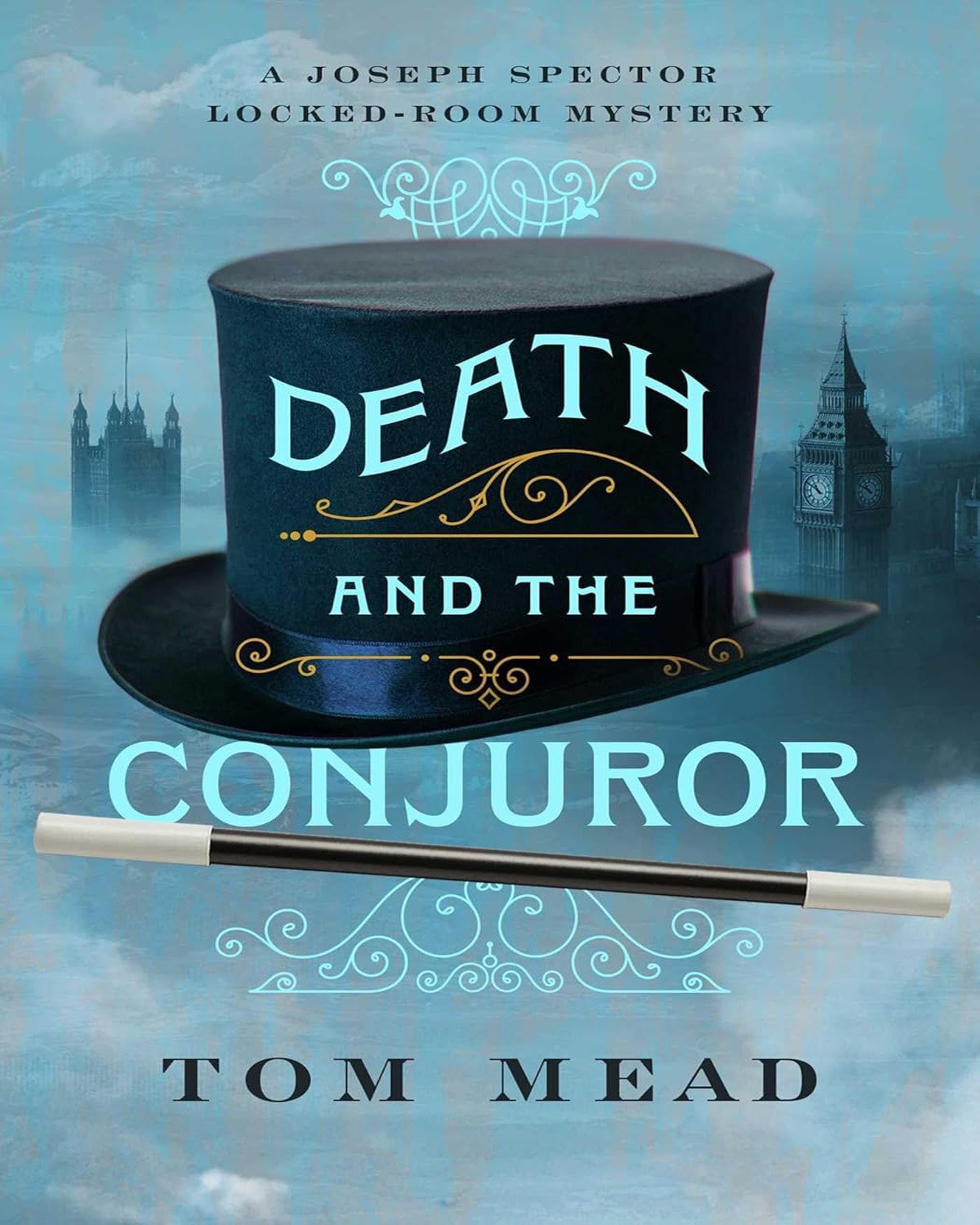
These were the “impossible” crimes—typically high-society affairs, where men in locked rooms were killed under impractical circumstances
A Golden Age, locked-room mystery with a hint of nostalgia and a subtle, understated humour, celebrating the impossible crime. Joseph Spector is a retired stage magician and crime fiction fan who understands the ins and outs of the impossible Golden Age crime far better than the police, represented by Inspector Flint, who at some point ponders John Dickson Carr as a suspect, not realising that Carr knows so much about murders because he is a crime fiction writer.
Spector is, in fact, a true connoisseur of crime fiction, and it is only suitable that Tom Mead presents his sleuth with not one, or two, but three impossible crimes. Two locked-room murders and the theft of a painting, all related to a famous high-society psychiatrist and his three patients. Death and the Conjurer also celebrates the stage with one of the suspects being an actress, and the chapters in the book have entr’actes, short breaks between the acts of plays and concerts.
Like any good magic trick, the crimes only appear impossible due to cleverly plotted, intricate misdirections and false assumptions that may fool both the police and the readers, but don’t hold up against the scrutiny of Spector, an expert in misdirection from his days as a stage performer.
For readers who like to guess along, the crimes are summarised at the end, with pertinent clues pointed out so you can go back and check the page they appeared on. A fun little service to the reader and something I personally would love to see more of in crime fiction.
Do you like magic tricks and illusions?
Locked-room mystery – Golden Age mystery


Leave a Reply